
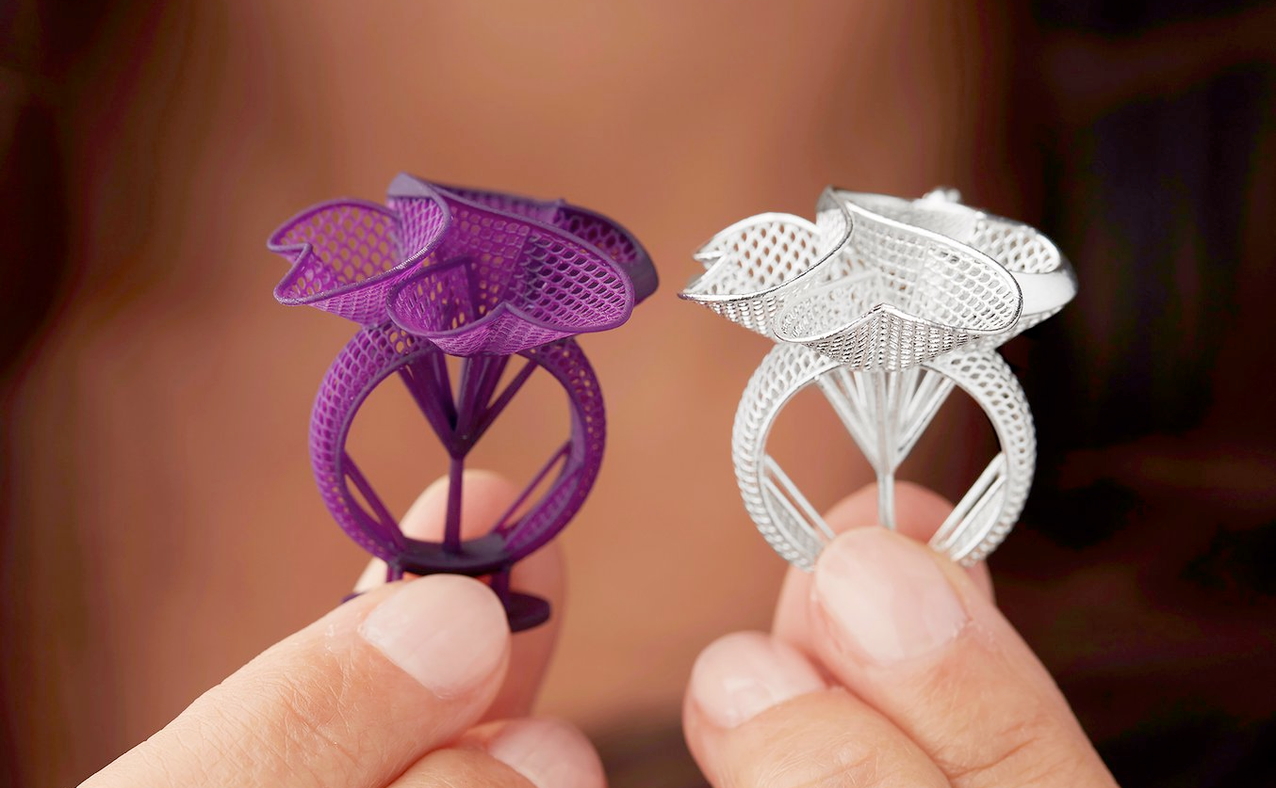
3D Printing Jewelry
Thanks to 3D printing, we’re living in an age of customization; consumers want unique, one-of-a-kind products, in all things. Discover how to design and 3D print jewelry!
Learn more about the process
3D printing is becoming popular in the world of jewelry. The technology has brought flexibility and creativity into the design, adding a plethora of possibilities and accessibility to unique jewelry pieces. The speed of 3D printing and the ability to make multiple design iterations in one day is key to using this technology. Reduced lead times make 3D printing a favorable technology to make jewelry, as this gives a competitive market edge.
By opting for this production method, you can create complex one-of-a-kind designs for each customer and fabricate intricate, complex designs. Or, you can use 3D printing for prototyping to make sure the finished product is exactly what you want, even if you decide to produce multiple of the same design.
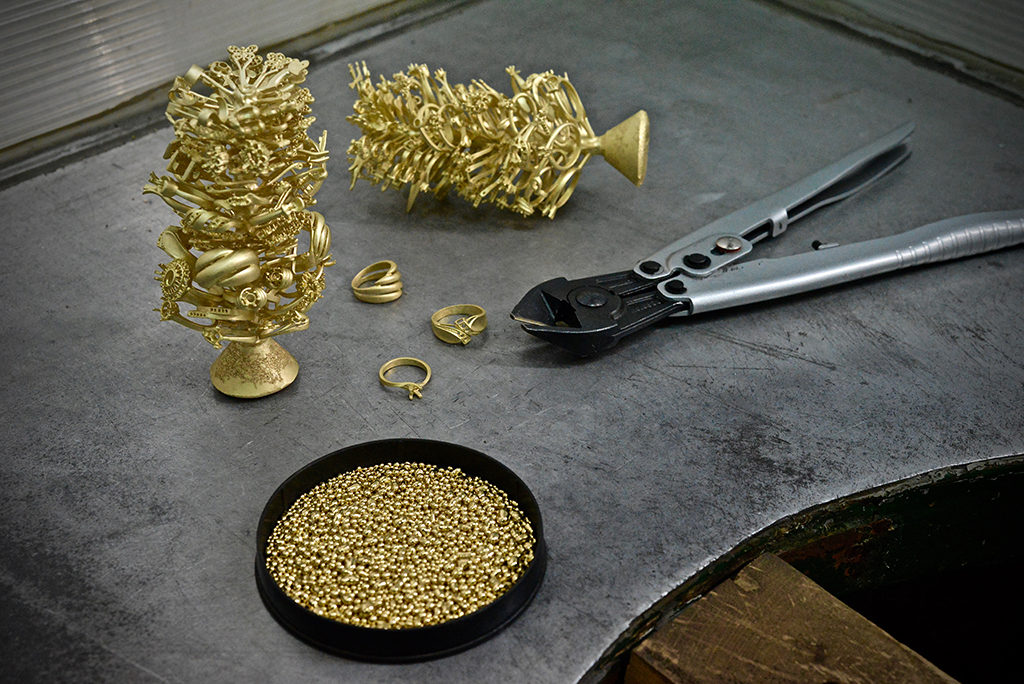
Lost-Wax Casting 3D-Prints
Two techniques have historically defined jewelry making: handcrafting and lost-wax casting. Both techniques require significant technical expertise, are highly time-intensive, and mistakes in the process can prove expensive. But today, digital design and 3D printing are primed to disrupt these age-old practices in a major way.
Learn more about the process
Supplementing traditional processes with digital techniques brings new possibilities in design and production to jewelers, as well as exciting new customization options for customers. With traditional lost-wax casting, jewelry designers hand-carve the original pattern in wax, place the wax pattern in a mold to be burned out, and then pour precious metals like gold or silver into the mold cavity to create the cast piece. To achieve its final appearance, designers polish and finish the cast piece to shine.
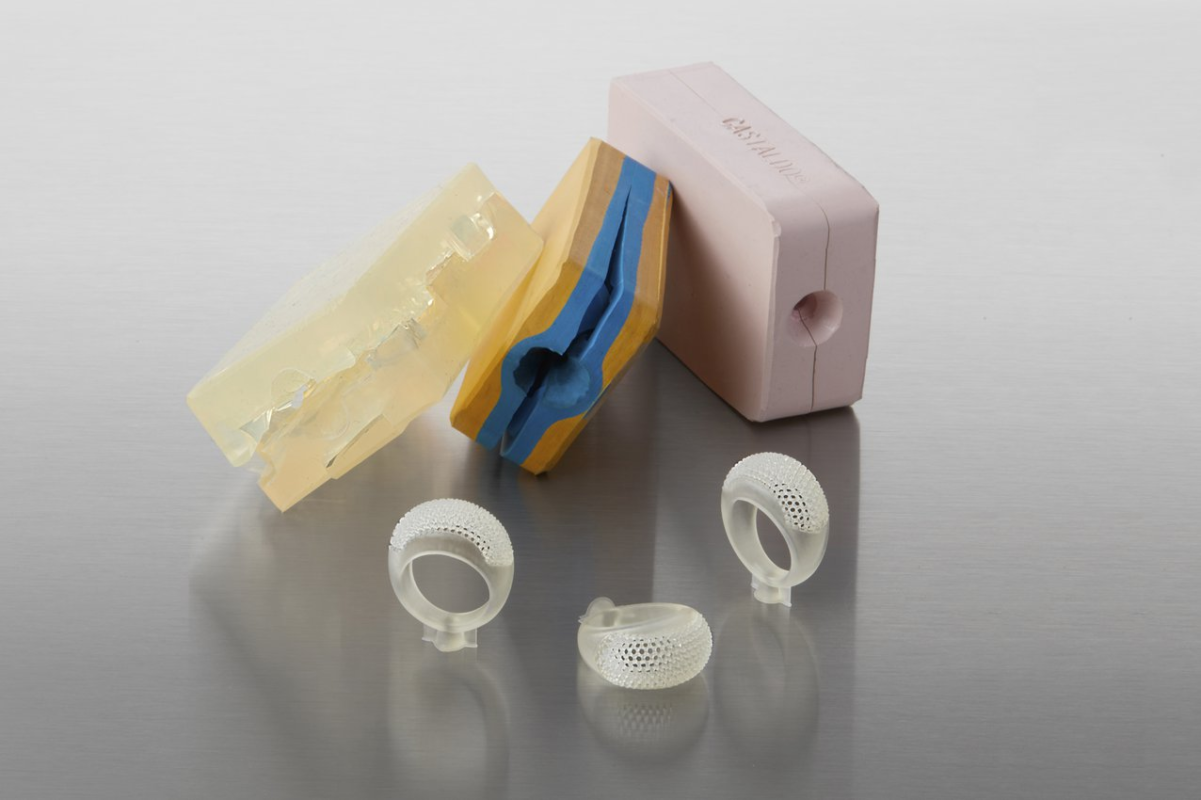
3D Printed Masters
3D printers can produce master models that are used to form room temperature vulcanization (RTV) molds and even durable high temperature vulcanized rubber molds. Vulcanized rubber molds are used to produce wax patterns in quantity for lost-wax casting.
Learn more about the technique
Digital tools are not only making jewelry easier to customize, but also simpler to mass-produce designs. With the quality that you can get with resin 3D printing for printing these jewelry pieces, you can jump straight from the 3D printed part to a master mold. The surface finish is already so smooth that it doesn’t require very much finishing. You can use that as the rubber mold for creating the final wax parts that go into production.
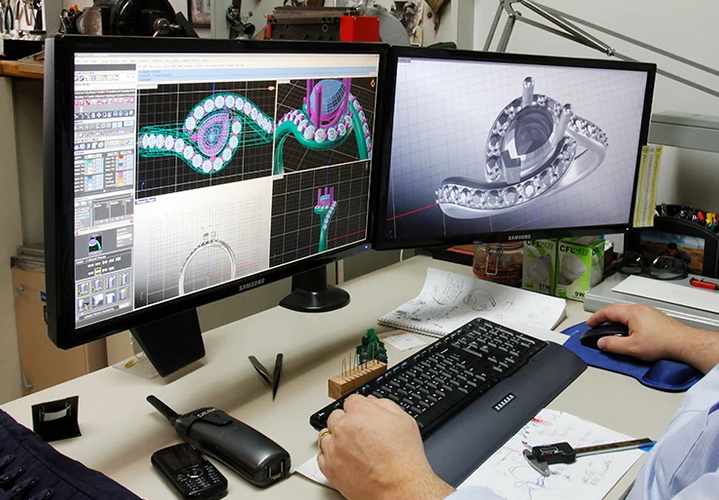
Digital Workflow / CAD
With the digital workflow, jewelers use CAD software tools to create the designs digitally and a high-resolution 3D printer to produce the 3D printed patterns that can then be cast in the mold. After burnout of the positive pattern, the process follows the same path as traditional investment casting. Thanks to the digital techniques, the need for time-intensive manual labor is reduced and the design itself is easy to preserve, modify, and recreate when needed.
Learn more about CAD
Computer-aided design (CAD) is the use of computers to aid in the creation, modification, analysis, or optimization of a design. CAD software is used to increase the productivity of the designer, improve the quality of design, improve communications through documentation, and to create a database for manufacturing. CAD output is often in the form of electronic files for 3Dprint or CNC machining.